October 30, 2025
When is the Right Time for a Knee or Hip Replacement?


 Dr. Bhushan Shitole | January 20, 2026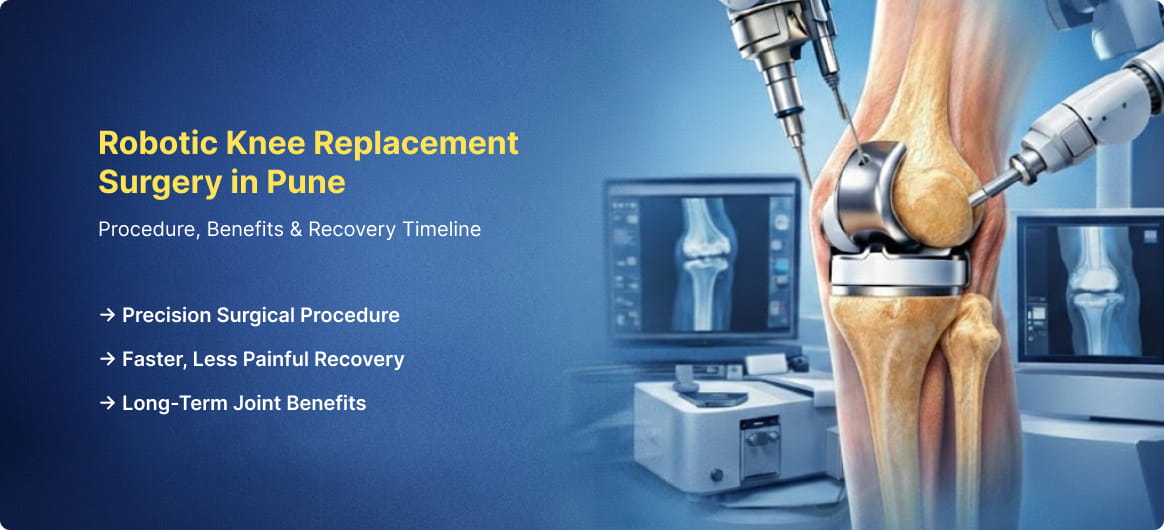
Chronic knee pain can severely affect your quality of life — limiting mobility, independence, and everyday comfort. When medications, injections, and physiotherapy no longer provide relief, knee replacement surgery becomes a reliable solution. Today, advancements in orthopedic technology have led to a safer and more precise option: robotic knee replacement surgery.
In Pune, Dr. Bhushan Shitole, a trusted knee replacement surgeon, offers robotic-assisted knee replacement surgery that focuses on accuracy, faster recovery, and long-lasting results. This blog explains the robotic knee replacement surgery procedure, its key benefits, and a detailed recovery timeline to help you make an informed decision.
Robotic knee replacement surgery is an advanced technique where a robotic system assists the surgeon in performing the procedure with exceptional precision. Unlike traditional knee replacement surgery, robotic technology allows for customized planning based on the patient’s unique knee anatomy.
It’s important to understand that the robot does not replace the surgeon. Instead, it acts as a highly sophisticated tool that helps the surgeon execute the procedure with greater control and accuracy.
According to Dr. Bhushan Shitole, robotic-assisted surgery allows for better implant positioning, improved joint alignment, and preservation of healthy surrounding tissues — all of which contribute to improved long-term outcomes.
The robotic knee replacement surgery procedure involves multiple carefully planned steps to ensure safety and precision.
1. Pre-Surgical Evaluation and Planning
Before surgery, advanced imaging such as CT scans or MRI scans are performed. These scans create a 3D model of the knee joint, enabling the surgeon to plan the surgery in detail — including implant size, positioning, and alignment.
This personalized planning helps address individual anatomical differences, something that traditional techniques cannot achieve with the same level of accuracy.
2. Anesthesia and Surgical Preparation
On the day of surgery, regional or general anesthesia is administered. A smaller, minimally invasive incision is made, which reduces damage to surrounding muscles and soft tissues.
3. Robotic-Assisted Bone Preparation
The robotic system provides real-time feedback during surgery. Using the pre-operative plan, the system guides precise bone cuts while protecting healthy tissue. The surgeon remains fully in control throughout the procedure.
4. Implant Placement
Once the knee surfaces are prepared, the artificial knee joint (implant) is positioned with robotic guidance. This ensures optimal alignment and balance of the joint, which is essential for natural movement and durability.
5. Closure and Immediate Recovery
After implant placement, the incision is closed, and the patient is shifted to recovery. Early mobilization is encouraged under medical supervision.
Patients increasingly prefer robotic-assisted surgery due to its multiple advantages over conventional knee replacement methods.
1. Exceptional Precision
Robotic technology enables millimetre-level accuracy, ensuring perfect implant alignment. Proper alignment reduces wear and improves joint performance over time.
2. Minimally Invasive Technique
Smaller incisions and minimal soft tissue damage lead to less pain, reduced blood loss, and faster healing.
3. Faster Recovery
Many patients begin walking within 24–48 hours after surgery. The reduced trauma allows for quicker rehabilitation and early return to daily activities.
4. Reduced Pain and Swelling
Because the surgery is more precise and less invasive, patients experience lower post-operative pain and swelling compared to traditional surgery.
5. Lower Risk of Complications
Accurate implant positioning reduces the risk of complications such as joint stiffness, instability, or the need for revision surgery.
6. Long-Lasting Results
Better alignment and balanced joint mechanics contribute to longer implant life and improved functional outcomes.
As a leading knee replacement surgeon in Pune, Dr. Bhushan Shitole emphasizes that robotic technology enhances surgical confidence and patient satisfaction.
Recovery varies from patient to patient, but robotic-assisted surgery typically follows a structured and faster recovery timeline.
Day 1: Early Mobilisation
Patients are encouraged to stand and walk with assistance within 24 hours of surgery. This helps improve circulation and reduces the risk of blood clots.
Days 2–4: Increasing Mobility
Physiotherapy begins early, focusing on knee bending, strengthening exercises, and walking with support. Most patients are discharged within 2–4 days.
Week 1–2: Improved Independence
Stitches are removed, pain levels reduce significantly, and patients begin walking with minimal support. Daily physiotherapy plays a crucial role during this phase.
Weeks 3–6: Return to Daily Activities
Most patients can comfortably perform routine activities such as walking independently, climbing stairs with support, and light household tasks. Driving may be resumed with the surgeon’s approval.
Months 3–6: Functional Recovery
Muscle strength and knee flexibility continue to improve. Many patients return to low-impact activities such as swimming, cycling, or extended walking.
6–12 Months: Complete Recovery
Full recovery, including strength, balance, and joint confidence, is usually achieved within this period. Patients enjoy improved mobility and a pain-free lifestyle.
Dr. Bhushan Shitole is known for combining modern technology with compassionate care, ensuring each patient receives a personalized and effective treatment plan.
📞 Contact Dr. Bhushan Shitole: +91 80559 15591, +91 78880 90930
1. What is robotic knee replacement surgery?
It is an advanced knee replacement procedure where robotic technology assists the surgeon for precise implant placement and better outcomes.
2. Is robotic knee replacement safe?
Yes, it is safe when performed by an experienced knee replacement surgeon like Dr. Bhushan Shitole.
3. How is robotic knee replacement different from traditional surgery?
Robotic surgery offers higher accuracy, smaller incisions, less pain, and faster recovery.
4. How long does the surgery take?
The procedure usually takes 1–1.5 hours.
5. When can I walk after surgery?
Most patients can walk with support within 24–48 hours.
Robotic knee replacement surgery represents a significant advancement in orthopedic care, offering precision, safety, faster recovery, and long-lasting results. If knee pain is limiting your mobility and quality of life, robotic-assisted surgery may be the solution.
For expert consultation and personalised care, consult Dr. Bhushan Shitole, a trusted knee replacement surgeon in Pune.
👉 Visit: https://drbhushanshitole.com/

October 30, 2025
When is the Right Time for a Knee or Hip Replacement?

January 15, 2026
When You Should Visit an Orthopedic Specialist?

January 25, 2026
Who Is the Right Candidate for Robotic Joint Replacement Surgery?

January 28, 2026
Most Common Sports Injuries Treated by a Sports Medicine Doctor in Pune

February 17, 2026
Sports Medicine vs Orthopaedic Care: Which Is Right for Your Injury?

At Wellness Clinic, we are committed to restoring mobility.