March 24, 2026
When Is Arthroscopy Surgery Recommended? Signs, Symptoms, and Real-World Situations


 Dr. Bhushan Shitole | March 05, 2026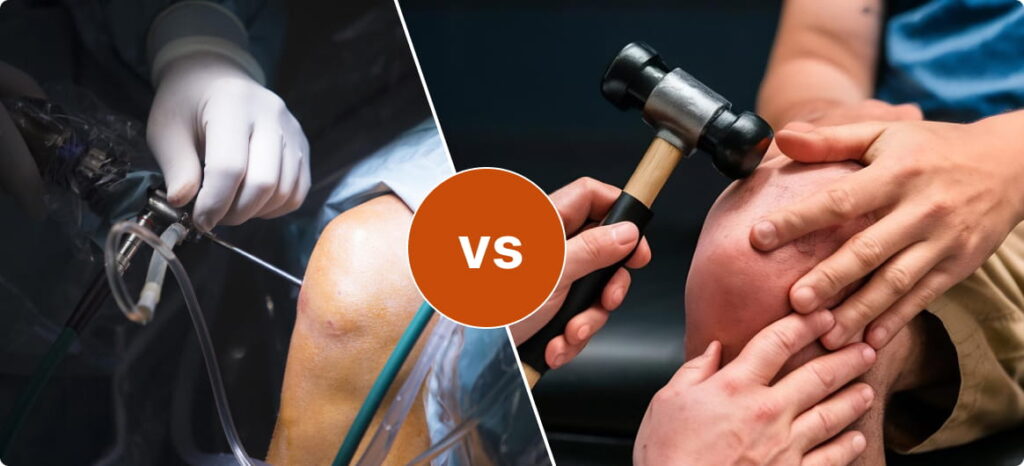
Although both procedures aim to relieve pain and restore mobility, there are several important differences in surgical planning, technology, and precision.
One of the key differences between robotic and traditional knee replacement surgery lies in the pre-operative planning process.
In traditional knee replacement surgery, planning is generally done using X-rays and diagnostic imaging. During the operation, the surgeon uses specialised surgical instruments and their clinical experience to prepare the bone and place the artificial implant.
In robotic-assisted knee replacement, advanced imaging technology is often used to create a 3D digital model of the patient’s knee joint. This allows the surgeon to plan the procedure in detail before surgery begins, including determining the ideal implant size, positioning, and alignment.
According to orthopaedic specialists, this type of digital planning can help personalise the surgery based on the patient’s individual anatomy.
Accuracy plays an important role in the long-term success of knee replacement surgery.
During traditional knee replacement, surgeons rely on manual instruments and alignment tools to prepare the bone and position the implant. Experienced surgeons are trained to achieve accurate results using these methods.
In robotic-assisted knee replacement, a computer-guided robotic system provides real-time feedback during the operation. The robotic technology does not replace the surgeon but instead assists with precise measurements and controlled movements.
This level of guidance can help the surgeon make adjustments during the procedure and may improve the accuracy of implant placement.
Proper alignment of the knee implant is essential for smooth joint movement and long-term durability.
Robotic-assisted systems provide detailed information about the knee’s alignment during surgery, allowing surgeons to adjust the implant position based on the patient’s joint mechanics.
In traditional knee replacement procedures, surgeons use specialised alignment guides and their surgical experience to position the implant correctly.
The knee joint contains several ligaments and soft tissues that help stabilise the joint and maintain natural movement.
Robotic-assisted systems allow surgeons to perform highly controlled bone preparation, which may help reduce disturbance to surrounding tissues.
Traditional knee replacement surgery also focuses on preserving important structures around the joint, but robotic technology provides additional guidance that can support surgical precision.
For example, patients with significant knee deformity or uneven joint alignment may benefit from the detailed planning available with robotic-assisted procedures.
Recovery after knee replacement surgery varies from patient to patient and depends on several factors, including age, overall health, and adherence to rehabilitation exercises.
In many hospitals, patients are encouraged to begin walking with support within 24 to 48 hours after surgery. The typical hospital stay following knee replacement in India is usually around three to five days, depending on the patient’s recovery progress.
Some individuals undergoing robotic-assisted surgery may experience:
Traditional knee replacement surgery usually requires about 12–15 weeks of physiotherapy and rehabilitation. However, with robotic knee replacement surgery, the rehabilitation period can be reduced to around 2–3 weeks because of the advantages mentioned above.
Both robotic-assisted and traditional knee replacement surgeries are considered safe and effective treatments for advanced knee arthritis and joint damage.
Traditional knee replacement has been performed for several decades and has helped millions of patients regain mobility and reduce chronic pain.
Robotic technology mainly improves surgical planning and implant placement accuracy, which may contribute to better joint balance and long-term performance of the implant. This means the implant can work well for many years, offering a more lasting solution for the patient’s problem.
Ultimately, the success of the surgery depends on the severity of joint damage, surgical expertise, and the patient’s commitment to rehabilitation.
Many patients ask their doctor whether robotic knee replacement surgery is better than traditional surgery.
The most suitable option depends on several factors, including:
Knee replacement surgery is typically recommended when severe pain, stiffness, and limited mobility continue despite medication, physiotherapy, or lifestyle changes.
For example, a patient in their 60s with advanced osteoarthritis and difficulty walking even short distances may benefit from joint replacement surgery after careful evaluation.
While robotic technology may increase surgical precision, the experience and judgement of the orthopaedic surgeon remain one of the most important factors in achieving successful outcomes. With robotic technology, an experienced surgeon can achieve better surgical outcomes, as it allows for greater precision and real-time guidance during the procedure.
Dr. Bhushan Shitole is an experienced orthopaedic surgeon in Pune who specialises in knee and joint care. His practice focuses on diagnosing and treating conditions such as arthritis, ligament injuries, and degenerative joint disorders.
His expertise includes:
In addition to knee replacement surgery, Dr. Shitole also performs arthroscopy (minimally invasive keyhole surgery)for various joint conditions.
His patient-focused approach ensures that each individual receives a treatment plan based on their specific joint condition, mobility needs, and long-term health goals.
Robotic-assisted surgery can use scans (image-based) or work without scans (imageless), depending on the system used, while traditional knee replacement relies on manual surgical instruments and the surgeon’s expertise.
Robotic surgery may provide improved surgical precision in all cases with intra-operative validation. However, both robotic and traditional knee replacement procedures can deliver excellent results when performed by an experienced orthopaedic surgeon.
Many patients begin walking with support within a day or two after surgery. Full recovery and strengthening of the joint typically take several weeks of physiotherapy and rehabilitation. With robotic surgery, recovery can be faster because there is less disturbance to the surrounding tissues. This leads to less pain after surgery and helps patients start moving sooner.
Knee replacement surgery may be recommended when severe knee pain caused by arthritis or joint damage does not improve with conservative treatments such as medication, physiotherapy, or lifestyle changes.
Understanding the differences between robotic vs traditional knee replacement surgery can help patients make informed decisions about their joint health and treatment options.
Both approaches aim to relieve pain, restore mobility, and improve quality of life. While robotic technology offers enhanced surgical precision, successful outcomes depend on accurate diagnosis, surgical expertise, and proper rehabilitation.
For expert consultation and advanced knee replacement treatment, patients can consult Dr. Bhushan Shitole in Pune for personalised guidance and care.
👉 Visit: https://drbhushanshitole.com/

March 24, 2026
When Is Arthroscopy Surgery Recommended? Signs, Symptoms, and Real-World Situations

March 19, 2026
Top 10 Conditions That Can Be Treated with Physiotherapy

March 12, 2026
When Should You See a Physiotherapist? Signs & Symptoms

February 26, 2026
How Should I Start My Fitness Journey?

February 19, 2026
Sports Medicine vs Orthopaedic Care: Which Is Right for Your…

At Wellness Clinic, we are committed to restoring mobility.