October 12, 2026
Weight Loss and Knee Arthritis: How Much Difference Does It…


 Dr. Bhushan Shitole | October 07, 2026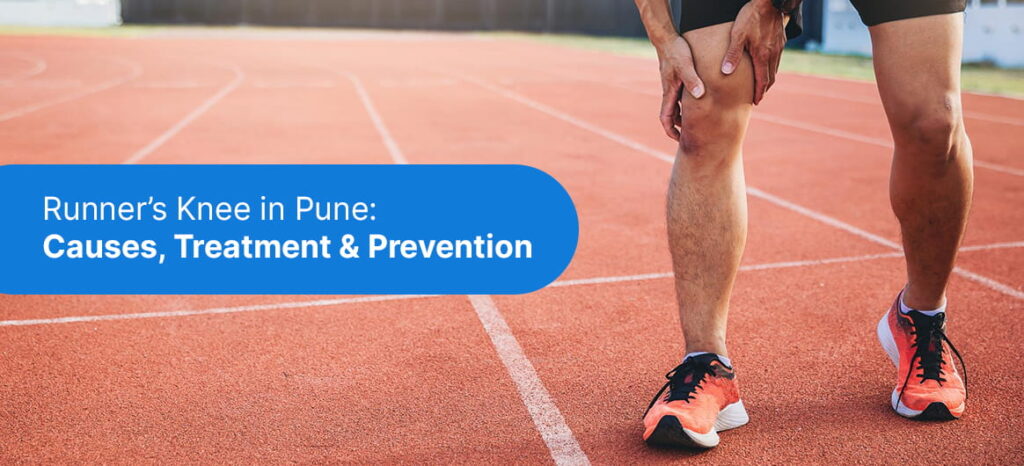
Running is an excellent way to stay active, but repetitive stress on the knee can sometimes lead to pain and discomfort. One common condition associated with running is runner’s knee, often referring to patellofemoral pain syndrome, which causes pain around or behind the kneecap.
If you experience knee pain after running, especially when climbing stairs, squatting, or sitting for long periods, understanding the possible cause can help you take the right steps toward recovery. While runner’s knee often improves with appropriate activity modification and rehabilitation, persistent symptoms should be evaluated by a sports medicine or orthopedic specialist.
Runner’s knee is commonly used to describe pain around the knee cap associated with repetitive activity. Patellofemoral pain syndrome is one of the conditions commonly referred to as runner’s knee. It can develop when repeated loading places stress on the area around the knee cap.
The condition is particularly common among runners who suddenly increase their mileage, intensity, or frequency of training. Muscle weakness, tightness, and movement or alignment factors can also contribute to symptoms.
Recognising runner’s knee symptoms early can help prevent the problem from interfering with your running routine.
Common symptoms may include:
The exact runners knee pain location can vary. Pain is commonly felt around the front or underside of the kneecap, although some people may experience more widespread knee discomfort.
Several factors can contribute to runner’s knee. It is often related to overuse rather than a single traumatic injury.
Common contributing factors include:
For beginners, suddenly going from little activity to frequent or long-distance running can place additional stress on the knee. This is why knee pain after running beginner runners experience should not simply be ignored.
The appropriate runners knee treatment depends on the cause, severity, and individual symptoms. Most cases of patellofemoral pain can initially be managed without surgery.
Treatment may involve:
A physiotherapist may focus on strengthening the quadriceps, hips, glutes, and core while improving flexibility and movement control.
If symptoms continue despite conservative treatment, an orthopedic or sports medicine specialist may recommend further evaluation or imaging to identify other possible causes of knee pain.
Runners knee recovery time varies from person to person. It depends on how long the symptoms have been present, their severity, the underlying cause, and how well the patient responds to treatment.
Returning to running too quickly can increase irritation and delay recovery. Instead, activity should generally be increased gradually once pain and movement have improved.
There is no single recovery timeline that applies to every runner. A specialist can help determine when it is appropriate to resume running based on your symptoms, strength, and functional progress.
Many people improve with appropriate treatment, rehabilitation, and changes to activities that aggravate the knee. Runner’s knee is therefore not necessarily permanent.
However, repeatedly running through pain or returning to intense training before adequate recovery may allow symptoms to persist. Identifying contributing factors and following a structured rehabilitation plan can help support a safer return to running.
Preventing runner’s knee starts with managing training load and strengthening the muscles that support the knee.
Pune runners can consider these practical steps:
Strength training can help the muscles around the hips and knees handle more of the workload, while cross-training can reduce repetitive strain from running every day.
Not every case of runner’s knee requires advanced treatment, but persistent or worsening pain should not be ignored.
Consider consulting a specialist if:
These symptoms may indicate a condition other than typical runner’s knee and may require a detailed orthopedic evaluation.
For runners, treatment should focus on more than simply controlling knee pain. Identifying the reason behind the symptoms and helping the athlete return to activity safely are important parts of sports injury management.
Dr. Bhushan Shitole provides orthopedic and sports medicine care in Pune, with a focus on sports-related conditions, arthroscopy, and musculoskeletal problems. His practice provides consultations at locations in Pimple Saudagar and Pimple Nilakh.
For runners dealing with recurring knee pain, a sports medicine evaluation can help identify contributing factors and guide an appropriate treatment and rehabilitation plan.
Contact Us for Sports Medicine Specialist in Pune
If running has become uncomfortable because of recurring knee pain, consult a sports medicine specialist to understand the cause and determine the right treatment approach for your condition.
Runner’s knee commonly refers to pain around the kneecap associated with running and overuse. Patellofemoral pain syndrome is one of the conditions commonly described as runner’s knee.
Runners knee pain location is commonly around the front, underside, or area surrounding the kneecap. The exact location can vary depending on the underlying problem.
Yes. Many cases can initially be managed with activity modification, physiotherapy, strengthening, flexibility work, and other non-surgical treatments.
Runner’s knee is not necessarily permanent. Many patients improve with appropriate treatment and rehabilitation, although recovery time varies.
If running causes persistent or worsening knee pain, it is advisable to reduce or stop the activity and seek professional assessment rather than repeatedly running through pain.
Runner’s knee can interrupt training, but persistent knee pain does not have to mean giving up running permanently. Understanding runner’s knee symptoms, managing training load, strengthening supporting muscles, and following an appropriate rehabilitation plan can help support recovery.
Whether you are a beginner or an experienced runner in Pune, recurring knee pain deserves attention. If symptoms continue or interfere with your daily activities or running routine, consulting a sports medicine specialist can help identify the cause and guide you toward a safer return to activity.

October 12, 2026
Weight Loss and Knee Arthritis: How Much Difference Does It…

September 28, 2026
Joint Pain in Winter: How to Prevent and Manage Joint…

September 21, 2026
Diabetes and Joint Health: Why Diabetic Patients Need Extra Orthopedic…

September 15, 2026
Chondromalacia and Cartilage Damage in the Knee: What Are Your…

September 08, 2026
Life After Hip Replacement: Walking, Driving, and Return to Activity…
At Wellness Clinic, we are committed to restoring mobility.