October 12, 2026
Weight Loss and Knee Arthritis: How Much Difference Does It…


 Dr. Bhushan Shitole | May 14, 2026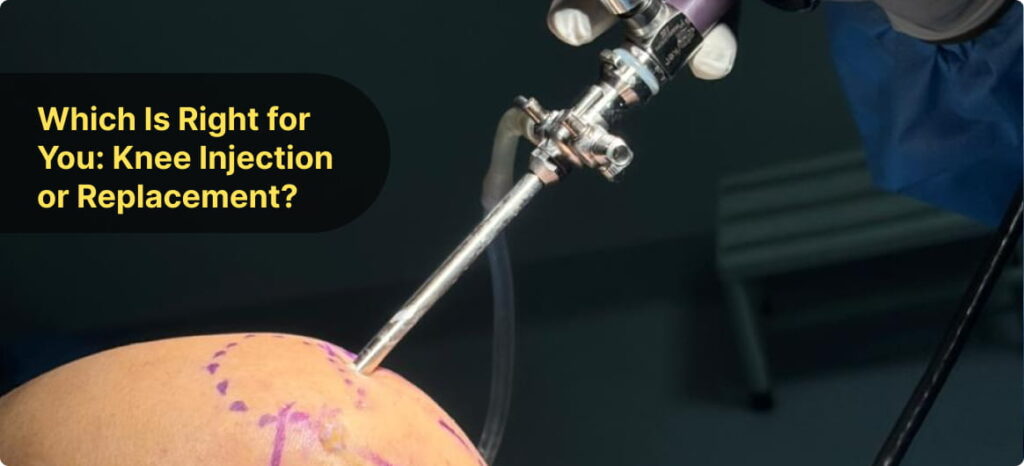
Knee pain is one of the most common orthopedic problems today, especially due to aging, obesity, lifestyle changes, and conditions like osteoarthritis. When pain starts affecting daily life, patients often get confused between two main treatment options: knee injection vs knee replacement.
Both treatments aim to reduce pain and improve movement, but they are very different in approach, results, and long-term effectiveness. Understanding these differences helps in choosing the right treatment at the right stage.
Knee injections are a non-surgical treatment where medicine is injected directly into the knee joint to reduce pain and inflammation. They are usually recommended in early to moderate stages of arthritis.
Common types of knee injections include:
Among these, hyaluronic acid injections vs knee replacement is a common comparison when patients want to delay surgery.
However, knee injections do not cure arthritis. They only provide temporary relief and may need to be repeated.
Knee replacement is a surgical procedure where damaged parts of the knee joint are replaced with artificial implants. It is recommended in severe arthritis where cartilage is completely worn out.
Types of knee replacement:
Unlike injections, knee replacement is a major surgery and requires hospitalization, recovery time, and physiotherapy.
The answer to knee injection vs knee replacement which is better depends on the severity of the condition.
👉 In simple terms:
Understanding the difference between knee injection vs knee replacement helps in making the right decision.
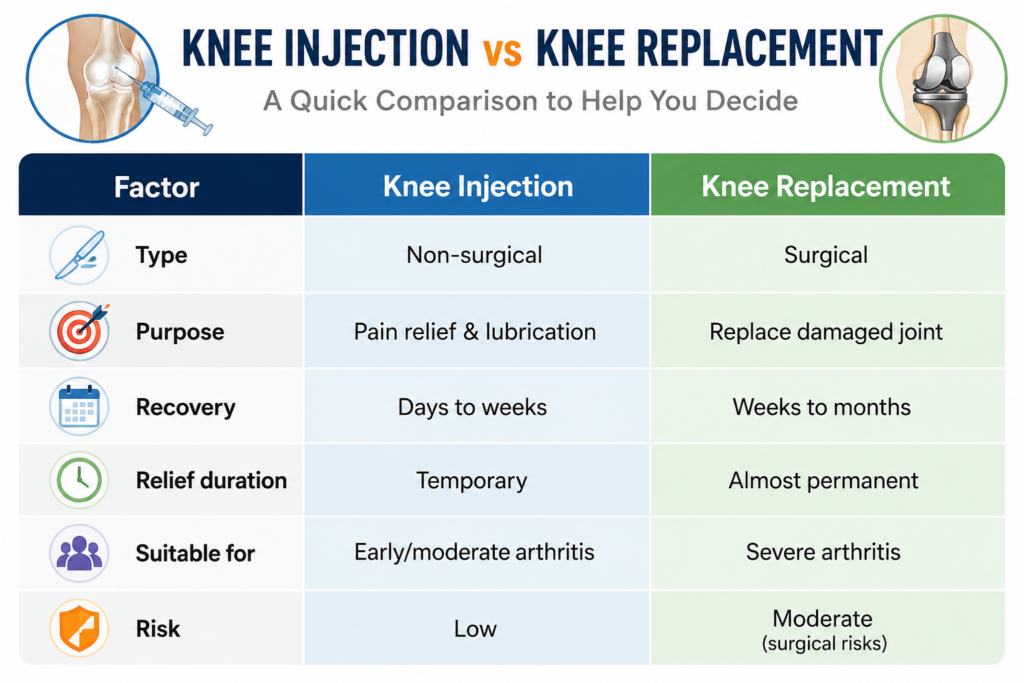
Many patients also explore latest alternatives to knee replacement before surgery:
Uses patient’s blood to reduce inflammation and improve healing.
Aims to regenerate damaged tissue, still under research.
Strengthens muscles and improves joint stability.
Even small weight loss reduces knee pressure significantly.
Acts as lubrication and improves joint movement temporarily.
These options are helpful in early stages but may not replace surgery in advanced cases.
When comparing hyaluronic acid injections vs knee replacement, the difference is clear:
So, injections are mainly used to delay surgery in moderate arthritis cases, not replace it.
Choosing between knee injection vs knee replacement depends on:
👉 A practical approach:
Start with injections and conservative treatments, and move to surgery only when necessary.
Consulting an orthopedic specialist is always the best step before deciding.
Dr. Bhushan Shitole is an orthopedic doctor who treats all types of knee problems, including knee pain, arthritis, and joint damage. He focuses on helping patients reduce pain and improve mobility through the right treatment approach, whether it is knee injections, therapy, or robotic knee replacement when required. His goal is to help patients return to a comfortable and active life.
Knee injections are non-surgical and provide temporary relief, while knee replacement is a surgical procedure that offers long-term results.
It depends on the condition. Injections are better for early stages, and replacement is better for severe damage.
It usually lasts from a few weeks to several months depending on the type of injection.
It can last for years many of the times most of the patients outlive the surgery depending on lifestyle and health conditions.
Injections need little recovery, while knee replacement requires weeks to months of rehabilitation.
Yes, PRP therapy, physiotherapy, weight management, and hyaluronic acid injections are some options depending on severity of the knee joint pain and stage of the disease.
Yes, they can delay knee replacement in early and moderate arthritis cases.
The discussion of knee injection vs knee replacement is not about which is better overall, but which is suitable for your condition. Knee injections are ideal for early relief, while knee replacement is a long-term solution for advanced knee damage.
Early diagnosis and proper treatment planning can help prevent worsening of knee problems and improve quality of life.

October 12, 2026
Weight Loss and Knee Arthritis: How Much Difference Does It…

October 07, 2026
Runner’s Knee: Causes, Treatment and Prevention for Pune Runners

September 28, 2026
Joint Pain in Winter: How to Prevent and Manage Joint…

September 21, 2026
Diabetes and Joint Health: Why Diabetic Patients Need Extra Orthopedic…

September 15, 2026
Chondromalacia and Cartilage Damage in the Knee: What Are Your…

At Wellness Clinic, we are committed to restoring mobility.