October 12, 2026
Weight Loss and Knee Arthritis: How Much Difference Does It…


 Dr. Bhushan Shitole | July 17, 2026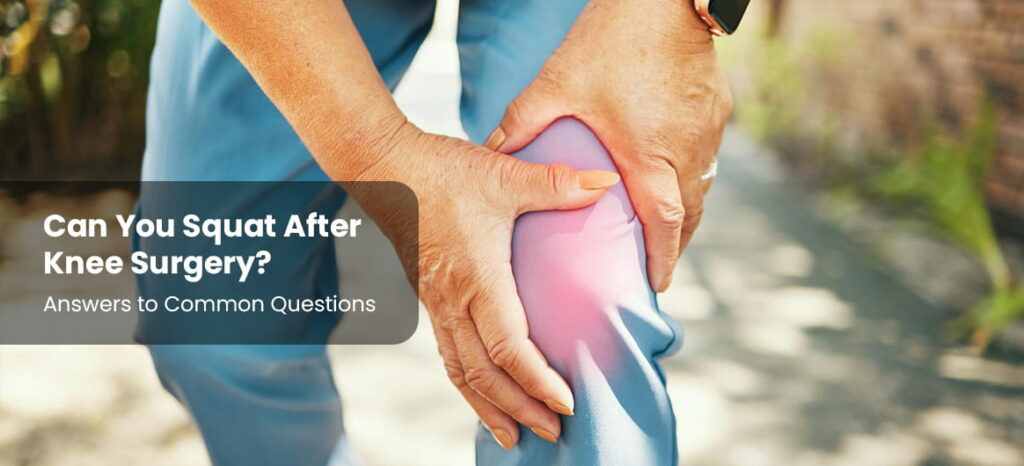
For many patients in India, one of the biggest concerns after knee replacement surgery isn’t just walking again it’s returning to everyday activities like using an Indian-style toilet, sitting on the floor, or squatting during household tasks.
If you’ve recently undergone knee replacement surgery or are planning one, it’s natural to wonder whether you’ll ever be able to squat comfortably again. The answer isn’t always a simple yes or no. It depends on several factors, including your recovery, knee flexibility, implant type, muscle strength, and your orthopedic surgeon’s recommendations.
Understanding the limitations and possibilities after surgery can help you recover safely while protecting your new knee for years to come.
After a total knee replacement (TKR), your natural knee joint is replaced with an artificial implant designed to reduce pain and improve movement. While modern implants restore excellent mobility, they cannot withstand the extreme range of natural mechanics of a healthy knee.
Squatting places significant pressure on the knee joint and requires deep bending, also known as deep flexion after TKR. This movement increases stress on the implant, surrounding muscles, ligaments, and soft tissues.
Unlike a healthy knee, an artificial knee has mechanical limits and it can undergo early wear and tear in extreme range of mechanics. For this reason, many orthopedic surgeons recommend avoiding repetitive deep squatting unless specifically advised otherwise.
One of the most common questions patients ask is whether they can return to using an Indian style toilet after knee replacement.
The answer depends on your recovery progress.
Using an Indian toilet requires:
Most patients are advised to use a Western toilet during the early recovery period because it places much less stress on the operated knee.
Even after recovery, some patients may find deep squatting uncomfortable or difficult. Your surgeon will assess whether it’s safe based on your knee function and implant stability.
Recovery after knee replacement focuses on gradually improving your knee range of motion.
Most daily activities require:
While many patients achieve 110–120° of knee flexion, reaching the degree required for deep squatting is not always possible or necessary.
Your recovery goal is comfortable, pain-free movement rather than achieving maximum bending.
Many orthopedic specialists recommend switching to a Western toilet, especially during the first few months after surgery.
A Western toilet:
This simple lifestyle modification can make recovery safer and more comfortable while supporting long-term implant survival and longitivity.
Floor-sitting is another activity many Indian patients ask about.
Depending on your flexibility, strength, and recovery, some people may eventually be able to sit on the floor. However, sitting cross-legged or getting up from the floor may remain challenging for others.
Factors that influence floor-sitting after knee surgery include:
Never force your knee into positions that cause pain or discomfort.
Successful knee replacement recovery depends on much more than surgery alone.
A structured physiotherapy program helps:
Following your rehabilitation plan consistently often has a greater impact on recovery than attempting advanced movements too early.
Recovering from knee replacement often involves making small adjustments to protect your new joint.
Your orthopedic surgeon may recommend:
These changes help reduce unnecessary stress on the implant and may contribute to better knee implant longevity.
Many patients worry that they will never return to normal life after surgery.
In reality, most people can comfortably:
The goal of knee replacement is to improve quality of life not necessarily to restore every high-flexion movement.
Contact your orthopedic surgeon if you experience:
Early evaluation can help identify any issues before they become more serious.
According to Dr. Bhushan Shitole, orthopedic specialist in Pimpri Chinchwad, every patient’s recovery is unique.
He advises patients not to compare their progress with others or rush into deep squatting simply because someone else has achieved it. Recovery depends on several factors, including age, muscle strength, rehabilitation, implant positioning, and overall health.
With proper physiotherapy, regular follow-ups, and realistic expectations, most patients regain excellent mobility and return to an active, independent lifestyle.
Recovery doesn’t end after surgery, it continues through proper rehabilitation.
Dr. Bhushan Shitole provides comprehensive post-operative rehabilitation, physiotherapy guidance, and personalized recovery plans to help patients regain strength, improve mobility, and return to everyday life with confidence.
If you’ve recently undergone knee replacement surgery or are preparing for one, expert guidance can make your recovery smoother and safer.
Some patients may achieve limited squatting after recovery, but deep squatting is generally not recommended unless your orthopedic surgeon specifically advises it.
Most surgeons recommend using a Western toilet during recovery. Whether you can safely use an Indian toilet later depends on your knee flexibility, strength, and overall recovery.
Most patients achieve around 120–130° of knee flexion, which is sufficient for most daily activities.
Repeated deep squatting may place additional stress on the implant. Always follow your surgeon’s recommendations regarding high-flexion activities.
Yes. Regular physiotherapy plays a key role in improving flexibility, strength, and overall knee function during recovery.
Most patients recover significantly within 2–3 months, although complete recovery and strength improvements may continue for up to a year.
Squatting and Indian Toilets After Knee Surgery remain among the most common concerns for patients undergoing knee replacement. While modern knee replacement surgery restores mobility and relieves pain, deep squatting may not be suitable for everyone.
Instead of focusing solely on returning to high-flexion activities, prioritize a safe recovery through physiotherapy, gradual strengthening, and lifestyle modifications. Following your orthopedic surgeon’s advice can help protect your implant and support long-term mobility.
If you have concerns about knee flexibility, toilet use, or post-operative rehabilitation, consult Dr. Bhushan Shitole for expert guidance and personalized recovery care.

October 12, 2026
Weight Loss and Knee Arthritis: How Much Difference Does It…

October 07, 2026
Runner’s Knee: Causes, Treatment and Prevention for Pune Runners

September 28, 2026
Joint Pain in Winter: How to Prevent and Manage Joint…
September 21, 2026
Diabetes and Joint Health: Why Diabetic Patients Need Extra Orthopedic…
September 15, 2026
Chondromalacia and Cartilage Damage in the Knee: What Are Your…
At Wellness Clinic, we are committed to restoring mobility.