October 12, 2026
Weight Loss and Knee Arthritis: How Much Difference Does It…


 Dr. Bhushan Shitole | August 18, 2026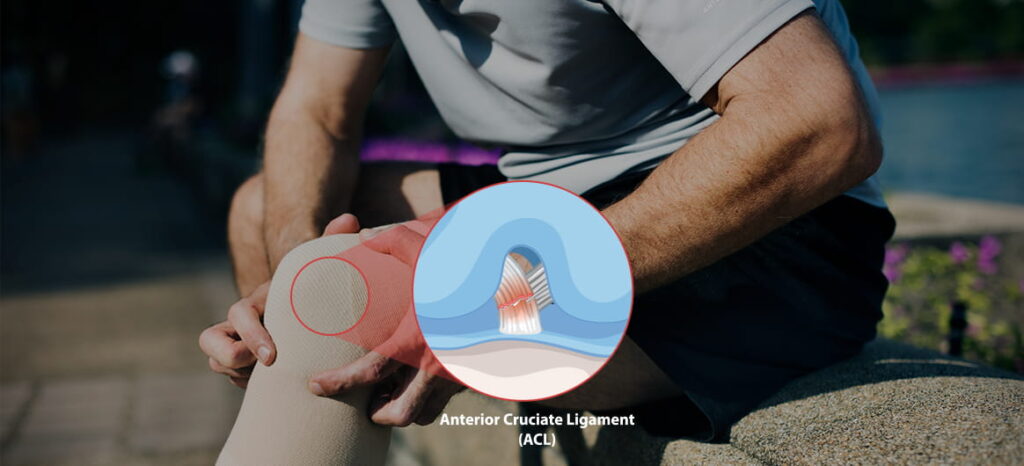
The Anterior Cruciate Ligament (ACL) is one of the most important ligaments in the knee, providing stability during walking, running, jumping, and sudden changes in direction. An ACL tear is among the most common sports knee injuries, affecting athletes as well as active individuals involved in recreational activities.
An ACL injury can range from a mild sprain to a complete tear. While some people recover with rehabilitation alone, others require ACL reconstruction surgery to regain knee stability and return to their normal activities.
In this blog, we’ll explain the common ACL injury symptoms, the different grades of ACL tears, available treatment options, and when surgery becomes necessary.
The ACL (Anterior Cruciate Ligament) connects the thigh bone (femur) to the shin bone (tibia). It prevents the shin bone from moving too far forward and provides rotational stability to the knee.
An ACL tear occurs when this ligament is stretched beyond its capacity or completely ruptures. These injuries commonly happen during:
Although commonly associated with athletes, ACL injuries can also occur from falls, road accidents, or everyday activities involving awkward knee movements.
Recognizing ACL injury symptoms early helps prevent further damage to the knee joint.
The most common signs include:
A Loud Popping Sound: Many patients report hearing or feeling a popping sound during a knee injury, often followed by immediate pain.
Sudden Knee Pain: Pain usually develops immediately after the injury and may worsen with movement or weight-bearing.
Rapid Swelling: The knee often swells within a few hours due to bleeding inside the joint.
Knee Instability: One of the hallmark signs is knee instability, where the knee feels like it may “give way” while walking or turning.
Reduced Range of Motion: Patients often find it difficult to fully bend or straighten the knee.
Doctors classify ACL injuries into three grades depending on the severity of ligament damage.
A Grade 1 ACL sprain is a mild injury where the ligament is stretched but remains intact.
Symptoms include:
Most patients recover with rest, physiotherapy, and activity modification.
A Grade 2 ACL sprain is a partial tear of the ligament.
Symptoms include:
Treatment depends on the patient’s age, activity level, and degree of instability.
A Grade 3 ACL sprain is a complete tear of the ligament.
Symptoms include:
This grade often requires surgical reconstruction, especially for active individuals.
Accurate diagnosis is essential to determine the extent of injury and the most appropriate treatment.
An orthopedic specialist typically performs:
To confirm the diagnosis, an MRI for ACL tear is considered the gold standard. MRI scans clearly show ligament injuries and help detect associated damage to the meniscus, cartilage, or other knee ligaments.
Not every ACL injury requires surgery.
Non-surgical ACL treatment may be suitable for:
Conservative treatment usually includes:
Many patients regain good function with dedicated rehabilitation, although some may continue to experience instability.
ACL reconstruction surgery is generally recommended when:
During surgery, the torn ligament is replaced with a tendon graft, allowing the knee to regain long-term stability after proper rehabilitation.
One of the most common questions patients ask is about ACL recovery time.
Recovery varies depending on the severity of injury and the chosen treatment.
Typical recovery timelines include:
Following your rehabilitation program consistently is essential for achieving the best possible outcome.
Although not all ACL injuries can be prevented, the risk can be reduced by:
Athletes who participate in football, basketball, badminton, volleyball, and similar sports can particularly benefit from preventive strengthening programs.
An ACL injury affects more than just the ligament; it can impact your mobility, confidence, and long-term knee health. Early diagnosis and the right treatment plan are crucial to achieving the best recovery.
Dr. Bhushan Shitole specializes in diagnosing and managing knee ligament injuries, including ACL tears. Using a thorough clinical examination supported by advanced imaging such as MRI for ACL tear, he accurately assesses the severity of the injury and recommends the most appropriate treatment.
Whether your condition is suitable for non-surgical ACL treatment through physiotherapy and rehabilitation or requires ACL reconstruction surgery, Dr. Shitole develops a personalized treatment plan based on your age, activity level, lifestyle, and recovery goals. His focus is not only on repairing the injury but also on restoring knee stability, preventing future complications, and helping patients safely return to work, sports, and daily life with confidence.
Common symptoms include a popping sound, sudden knee pain, rapid swelling, instability, and difficulty bending or straightening the knee.
ACL injuries are classified into three grades: Grade 1 is a mild sprain, Grade 2 is a partial tear, and Grade 3 is a complete ligament tear.
Yes, some Grade 1 and Grade 2 injuries can improve with physiotherapy, strengthening exercises, bracing, and activity modification.
Surgery may be recommended for complete tears, repeated knee instability, associated injuries, or athletes who want to return to pivoting and high-impact sports.
Most patients require around 6–9 months for functional recovery, while returning to competitive sports may take 9–12 months with proper rehabilitation.
Yes. Untreated instability may increase the risk of meniscus damage, cartilage problems, and other long-term knee complications.
An ACL tear can significantly affect your mobility, especially if left untreated. Recognizing early ACL injury symptoms, understanding the differences between Grade 1, 2, and 3 ACL sprains, and seeking timely orthopedic evaluation are essential for preventing long-term knee damage.
If you experience a popping sound during a knee injury, persistent swelling, or knee instability, don’t ignore the symptoms. Early consultation with Dr. Bhushan Shitole can help determine whether non-surgical ACL treatment is sufficient or if ACL reconstruction surgery is the best option. With expert care, an accurate diagnosis, and a structured rehabilitation plan, you can recover effectively and return to an active, pain-free lifestyle.

October 12, 2026
Weight Loss and Knee Arthritis: How Much Difference Does It…

October 07, 2026
Runner’s Knee: Causes, Treatment and Prevention for Pune Runners

September 28, 2026
Joint Pain in Winter: How to Prevent and Manage Joint…
September 21, 2026
Diabetes and Joint Health: Why Diabetic Patients Need Extra Orthopedic…
September 15, 2026
Chondromalacia and Cartilage Damage in the Knee: What Are Your…
At Wellness Clinic, we are committed to restoring mobility.