October 12, 2026
Weight Loss and Knee Arthritis: How Much Difference Does It…


 Dr. Bhushan Shitole | June 24, 2026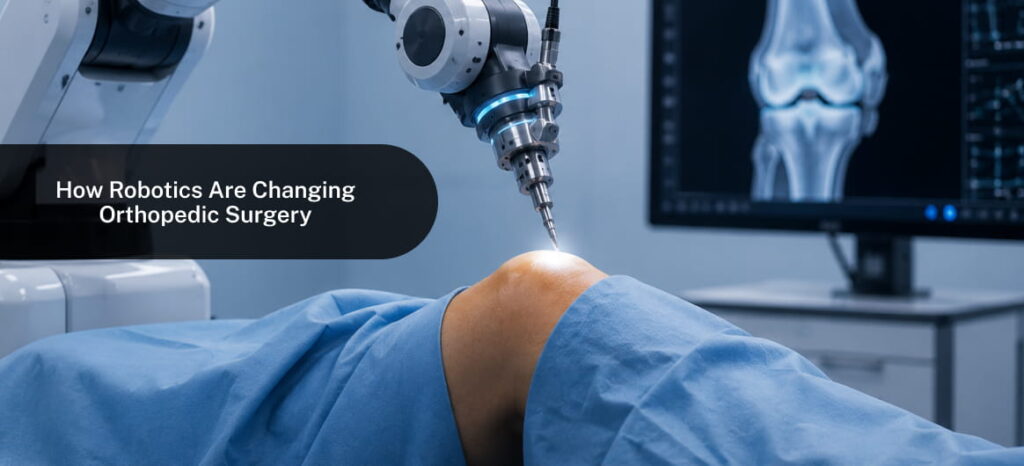
Orthopedic surgery has witnessed remarkable advancements over the last decade, and one of the most transformative developments is the integration of robotic technology. From enhanced surgical planning to greater precision during procedures, robotics is helping orthopedic surgeons deliver improved outcomes for patients.
As more hospitals and specialists adopt robotic orthopedic surgery, patients are experiencing benefits such as increased accuracy, better implant positioning, reduced tissue damage, and potentially faster recovery times.
Understanding How Robotics Are Changing Orthopedic Surgery can help patients make informed decisions about modern treatment options and appreciate how technology is reshaping the future of joint care.
Robotic technology has become an important tool in orthopedic surgery, particularly in joint replacement procedures. Contrary to popular belief, robots do not perform surgeries independently. Instead, they assist surgeons by providing real-time data, advanced imaging, and precise guidance throughout the procedure.
These robotic systems use sophisticated software, three-dimensional imaging, and surgical navigation systems to help surgeons plan and execute procedures with exceptional accuracy.
Today, robotic-assisted techniques are increasingly being used in:
The goal is to improve precision while preserving healthy bone and surrounding tissues.
One of the biggest advantages of robotic orthopedic surgery is enhanced accuracy.
Traditional joint replacement procedures rely heavily on manual measurements and surgical expertise. Robotic systems provide surgeons with detailed anatomical information and real-time guidance during surgery.
Benefits of increased precision include:
Precision orthopedic surgery can contribute to better long-term function and implant longevity.
Every patient’s anatomy is unique. Robotic systems allow surgeons to create a customized surgical plan before entering the operating room.
Using advanced imaging technology, the surgeon can:
This personalized approach helps improve surgical outcomes and enhances patient confidence.
Successful joint replacement depends heavily on proper implant placement and alignment.
Even small variations in positioning can affect:
Robot-assisted joint replacement enables surgeons to make highly accurate adjustments during surgery, helping achieve optimal alignment and restoring natural joint movement.
This is particularly valuable in robotic knee replacement procedures where precise alignment plays a critical role in long-term success.
Modern robotic-assisted knee surgery allows surgeons to work with greater precision around muscles, ligaments, and soft tissues.
As a result, patients may experience:
This contributes to a smoother rehabilitation process and improved patient experience.
One of the key innovations in robotic surgery is the use of a surgical navigation system.
During the procedure, robotic technology provides real-time information about:
This continuous feedback allows surgeons to make informed decisions throughout the operation, improving accuracy and consistency.
The combination of surgeon expertise and advanced technology helps optimize surgical outcomes.
Many patients choose robotic-assisted procedures because of the possibility of faster recovery.
While recovery varies from person to person, robotic surgery may contribute to:
Faster recovery orthopedic surgery allows patients to return to daily activities with greater confidence and comfort.
The future of orthopedic care is becoming increasingly technology-driven.
Advancements in Robotic-assisted orthopedic surgery continue to improve:
As robotic technology evolves, orthopedic procedures are expected to become even more precise, efficient, and personalized.
The integration of robotics represents an exciting step forward in delivering better patient outcomes and improving the overall surgical experience.
According to Dr. Bhushan Shitole, Orthopedic Doctor and Robotic Knee Replacement Surgeon in Pune, robotic technology is enhancing the surgeon’s ability to perform joint replacement procedures with greater accuracy and confidence.
He emphasizes that robotic systems do not replace the surgeon’s expertise. Instead, they serve as advanced tools that help optimize surgical planning and execution.
Dr. Bhushan Shitole highlights three key advantages of robotic-assisted procedures:
His approach combines advanced surgical technology with extensive orthopedic expertise to provide patients with high-quality, patient-centered care.
If you are experiencing chronic knee pain, arthritis, reduced mobility, or are considering robotic knee replacement surgery, consult Dr. Bhushan Shitole, experienced Orthopedic Doctor and Robotic Knee Replacement Surgeon in Pune.
With expertise in advanced robotic-assisted procedures and patient-focused orthopedic care, Dr. Shitole helps patients achieve improved mobility, reduced pain, and better long-term outcomes.
Robotic orthopedic surgery uses advanced technology to assist surgeons in planning and performing orthopedic procedures with greater precision.
No. The surgeon remains in complete control throughout the procedure. The robotic system provides guidance, measurements, and real-time feedback.
Robotic knee replacement is a joint replacement procedure that uses robotic technology to assist surgeons in accurately positioning implants and optimizing joint alignment.
Robotic systems help improve accuracy and planning, but overall safety depends on multiple factors including the surgeon’s expertise and the patient’s condition.
Many patients experience smoother recovery due to increased precision and reduced tissue disruption, although recovery varies for each individual.
Patients with severe knee arthritis, chronic joint pain, reduced mobility, or advanced joint degeneration may be suitable candidates after orthopedic evaluation.
Understanding How Robotics Are Changing Orthopedic Surgery highlights how modern technology is transforming the way orthopedic procedures are performed.
From personalized planning and improved precision to better implant alignment and enhanced surgical navigation, robotic orthopedic surgery offers several potential advantages for both surgeons and patients.
As robotic technology continues to evolve, patients can expect safer, more accurate, and increasingly personalized treatment options for joint replacement and orthopedic care.
For individuals considering knee replacement surgery, consulting an experienced robotic orthopedic specialist can help determine whether robotic-assisted treatment is the right choice.

October 12, 2026
Weight Loss and Knee Arthritis: How Much Difference Does It…

October 07, 2026
Runner’s Knee: Causes, Treatment and Prevention for Pune Runners

September 28, 2026
Joint Pain in Winter: How to Prevent and Manage Joint…

September 21, 2026
Diabetes and Joint Health: Why Diabetic Patients Need Extra Orthopedic…

September 15, 2026
Chondromalacia and Cartilage Damage in the Knee: What Are Your…

At Wellness Clinic, we are committed to restoring mobility.