November 16, 2026
Heel Pain in the Morning (Plantar Fasciitis): Causes, Footwear and…


 Dr. Bhushan Shitole | October 26, 2026
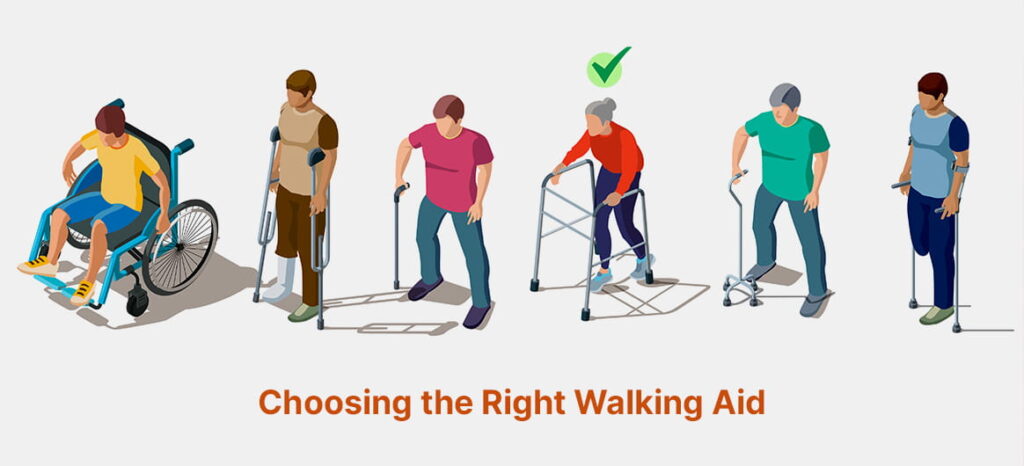
Walking aids can provide important support when pain, weakness, balance problems, injury, or surgery makes walking difficult. But choosing the right aid is not simply about selecting the one that feels most comfortable. A walker, walking stick, or crutches provides a different level and type of support.
Understanding the types of walking aids and their uses can help patients choose appropriate support while recovering from an injury, surgery, or mobility problem. The right walking aid should match your strength, balance, weight-bearing ability, and walking needs. A healthcare professional or physiotherapist can help determine which option is safest for you.
A walking aid can improve stability, reduce the amount of weight placed on an affected leg, and provide confidence while moving. However, using an unsuitable aid or using it incorrectly can increase the risk of falls or place unnecessary stress on other parts of the body.
The right aid depends on factors such as:
The goal is to provide enough support for safe movement without creating unnecessary dependence on the walking aid.
There are several various types of walking aids with their use, including canes or sticks, walkers, and crutches. Each is designed for different mobility requirements.
A walking stick generally provides the least amount of support among the three common options. It may be suitable for people who have mild balance problems, weakness, or discomfort affecting one side of the body.
A cane can provide an additional point of contact with the ground and may improve stability while walking.
It is important that the cane is adjusted to the correct height and used appropriately. A poorly fitted cane may affect posture and walking mechanics.
A walker provides a broader base of support and is generally more stable than a cane. It may be recommended for people with significant balance difficulties, weakness, or during the early stages of recovery after certain surgeries.
Walkers can have four points of contact with the ground, providing additional stability while standing and walking.
For people who need substantial support, a walker may be a better option than a cane. However, the appropriate type of walker depends on the individual’s mobility and ability to use it safely.
Crutches can be useful when a person needs to reduce or avoid putting weight on one leg, such as after certain injuries or surgeries.
They require more strength, balance, and coordination than a standard walker. Correct fitting and technique are particularly important because incorrect crutch use can cause discomfort or place pressure on the arms and shoulders.
When comparing cane vs crutches vs walker, the main difference is the amount and type of support they provide.
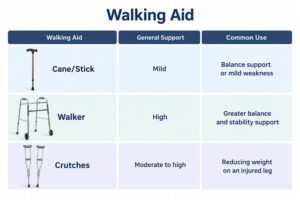
This is only a general comparison. The most suitable walking aid depends on your individual condition, strength, balance, and weight-bearing restrictions.
If balance is the primary concern, a walker may provide more stability than a cane because it offers a wider base of support.
However, the best walking aid for balance varies from person to person. Someone with mild balance difficulty may only need a cane, while someone with significant instability may require a walker.
A healthcare professional can assess your walking pattern, strength, and balance before recommending an appropriate aid.
There is no single best walking aid for elderly people. Age alone does not determine which walking aid should be used.
An older adult with mild weakness may be comfortable using a cane, while someone with significant balance problems may require a walker. Crutches may be appropriate in specific situations where reducing weight on a particular leg is necessary.
The walking aid should be selected based on the person’s physical abilities, home environment, medical condition, and level of independence.
When learning how to choose the right walking aid, consider both your medical needs and your ability to use the device safely.
Ask these questions:
The answer can help your doctor or physiotherapist determine whether a stick, walker, or crutches are appropriate.
The height of the aid is also important. An incorrectly adjusted walking aid can affect posture and make walking more difficult.
Even the right walking aid may not provide adequate support if it is used incorrectly.
Common mistakes include:
Proper instruction can help patients use their walking aid safely and confidently.
Patients should not stop using a walker, cane, or crutches simply because they feel slightly better. The transition should happen when strength, balance, and walking control have improved sufficiently.
Depending on the reason for using the aid, a healthcare professional may recommend progressing from a walker to a cane and eventually to independent walking.
After surgery or injury, your doctor or physiotherapist can guide you through this progression based on your recovery.
Choosing a walking aid is only one part of recovering from a knee or lower-limb condition. Understanding why a patient needs support is equally important.
Dr. Bhushan Shitole provides orthopedic care in Pune with expertise in knee conditions, joint replacement, sports medicine, and rehabilitation-related care. For patients experiencing difficulty walking due to knee problems, injury, arthritis, or recovery after surgery, an orthopedic assessment can help identify the underlying problem and determine an appropriate treatment pathway.
For patients undergoing knee replacement, mobility support may also be part of the early recovery process. The type and duration of walking assistance can vary depending on the procedure, individual strength, and rehabilitation progress.
Contact Us for Dr. Bhushan Shitole, Knee Specialist in Pune
If knee pain, weakness, balance difficulties, or recovery after surgery is affecting your ability to walk, consult a knee specialist to understand the right treatment and mobility support for your condition.
A walker generally provides more stability than a walking stick. A cane may be sufficient for people who need mild support, while a walker may be more appropriate for significant balance or strength difficulties.
Crutches may be recommended when you need to reduce or avoid putting weight on an injured or operated leg. Your doctor should determine the appropriate level of weight-bearing and mobility support.
A walker often provides greater stability because of its wider base. However, the best walking aid for balance depends on your individual strength, stability, and medical condition.
Yes. A walking stick can be useful for older adults who need mild balance or stability support. However, people with significant instability may require a walker instead.
You can usually transition away from a walking aid when you can walk safely with adequate balance, strength, and control. Your doctor or physiotherapist can guide you on when it is appropriate.
Choosing between a walker, stick, or crutches depends on the level of support you need, your balance, muscle strength, weight-bearing ability, and the reason for your mobility difficulty.
A cane may provide support for mild balance problems, a walker can offer greater stability, and crutches can help reduce weight on an affected leg. However, selecting and using the right aid correctly is essential for safe mobility.
If you are recovering from knee surgery, an injury, or dealing with persistent walking difficulties, professional assessment can help determine the most suitable walking aid and treatment plan for your needs.

November 16, 2026
Heel Pain in the Morning (Plantar Fasciitis): Causes, Footwear and…

November 09, 2026
Meniscus Tear: Will It Heal on Its Own or Do…

October 30, 2026
Gym Injuries: Knee, Shoulder and Back Injuries from Wrong Lifting

October 12, 2026
Weight Loss and Knee Arthritis: How Much Difference Does It…

October 07, 2026
Runner’s Knee: Causes, Treatment and Prevention for Pune Runners

At Wellness Clinic, we are committed to restoring mobility.