October 12, 2026
Weight Loss and Knee Arthritis: How Much Difference Does It…


 Dr. Bhushan Shitole | April 13, 2026
Joint pain, ligament injuries, and sports-related damage often require surgical intervention when non-surgical treatments fail. In the past, traditional open surgery was the only option available. However, modern medical advancements have introduced arthroscopic surgery, a minimally invasive technique that allows surgeons to diagnose and treat joint problems with greater precision.
Many patients today prefer this approach because of the numerous benefits of arthroscopic surgery over traditional surgery, including smaller incisions, faster recovery, and less post-operative discomfort. In this blog, we will explore the advantages of arthroscopic surgery, along with its limitations, to help patients understand why it has become a preferred treatment for many orthopedic conditions.
Arthroscopic surgery is a minimally invasive orthopedic procedure in which a surgeon inserts a small camera called an arthroscope into the joint through tiny incisions. The camera displays detailed images of the joint on a monitor, allowing the surgeon to diagnose and treat the problem using specialized instruments.
This technique is commonly used for conditions affecting the:
Because the procedure requires only small incisions, it causes less trauma to surrounding tissues compared to traditional open surgery.

One of the biggest benefits of arthroscopic surgery is the use of very small incisions instead of large surgical cuts. This means:
Patients often appreciate the fact that the procedure leaves only small marks rather than large surgical scars.
Compared to traditional surgery, arthroscopy significantly reduces recovery time. Since the surrounding muscles and tissues are not heavily disturbed, patients can return to their daily activities sooner.
In many cases:
This makes arthroscopy particularly beneficial for active individuals and athletes.
Another major advantage of arthroscopic surgery is reduced post-operative pain. Smaller incisions and minimal tissue damage mean patients typically experience:
This improves overall patient comfort during recovery.
Traditional open surgeries expose a larger area of tissue, which may increase the risk of infection. With arthroscopic procedures, the small incision size significantly reduces this risk, making the procedure safer for many patients.
The arthroscope provides high-definition images of the joint interior, helping surgeons identify issues that might not be visible during traditional surgery.
This allows surgeons to:
Most arthroscopic surgeries are performed as day-care procedures, meaning patients can return home on the same day.
This results in:
Arthroscopy is commonly used for shoulder injuries, including rotator cuff tears, shoulder instability, and impingement syndrome.
However, when performed by an experienced orthopedic surgeon, arthroscopic shoulder surgery provides excellent results for many patients.
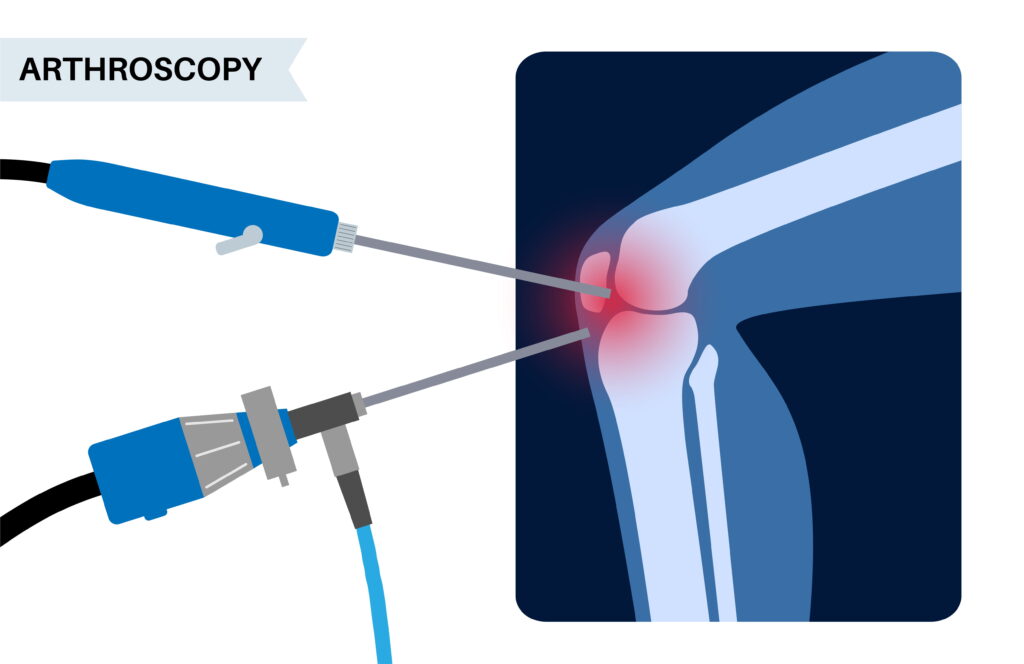
Understanding both the advantages and disadvantages of arthroscopy can help patients make informed decisions.
Despite these limitations, arthroscopy remains one of the most advanced and effective surgical techniques in modern orthopedics.
If you are experiencing persistent joint pain or sports injuries, consulting an experienced orthopedic specialist is crucial.
Dr. Bhushan Shitole is a highly skilled orthopedic surgeon known for providing advanced arthroscopic treatments for knee, shoulder, and sports injuries. With a patient-focused approach and modern surgical techniques, Dr. Shitole aims to deliver:
His expertise in arthroscopic and joint preservation procedures ensures patients receive the most effective treatment with optimal outcomes.
👉 Visit: https://drbhushanshitole.com/
📞 Contact: +91 80559 15591, +91 78880 90930
The main benefits include smaller incisions, faster recovery, reduced pain, minimal scarring, and lower infection risk compared to traditional surgery.
In many cases, yes. Arthroscopic surgery is minimally invasive and allows quicker healing and less tissue damage, making it preferable for many joint conditions.
Recovery time depends on the joint and condition treated, but most patients recover faster than traditional surgery, often returning to normal activities within a few weeks.
The pros include less pain, faster recovery, and minimal scarring, while the cons include limitations for severe joint damage and the need for specialized surgical expertise.
Yes, arthroscopic surgery is generally considered safe and effective when performed by a qualified orthopedic surgeon.
Arthroscopic surgery has transformed the way orthopedic conditions are treated. With benefits such as smaller incisions, faster recovery, reduced pain, and improved surgical precision, it offers significant advantages over traditional open surgery.
While it may not be suitable for every condition, many patients can benefit greatly from this minimally invasive approach when performed by an experienced orthopedic surgeon.If you are considering surgery for joint pain or sports injuries, consulting an expert like Dr. Bhushan Shitole can help determine whether arthroscopic surgery is the right choice for you.

October 12, 2026
Weight Loss and Knee Arthritis: How Much Difference Does It…

October 07, 2026
Runner’s Knee: Causes, Treatment and Prevention for Pune Runners

September 28, 2026
Joint Pain in Winter: How to Prevent and Manage Joint…

September 21, 2026
Diabetes and Joint Health: Why Diabetic Patients Need Extra Orthopedic…

September 15, 2026
Chondromalacia and Cartilage Damage in the Knee: What Are Your…
At Wellness Clinic, we are committed to restoring mobility.